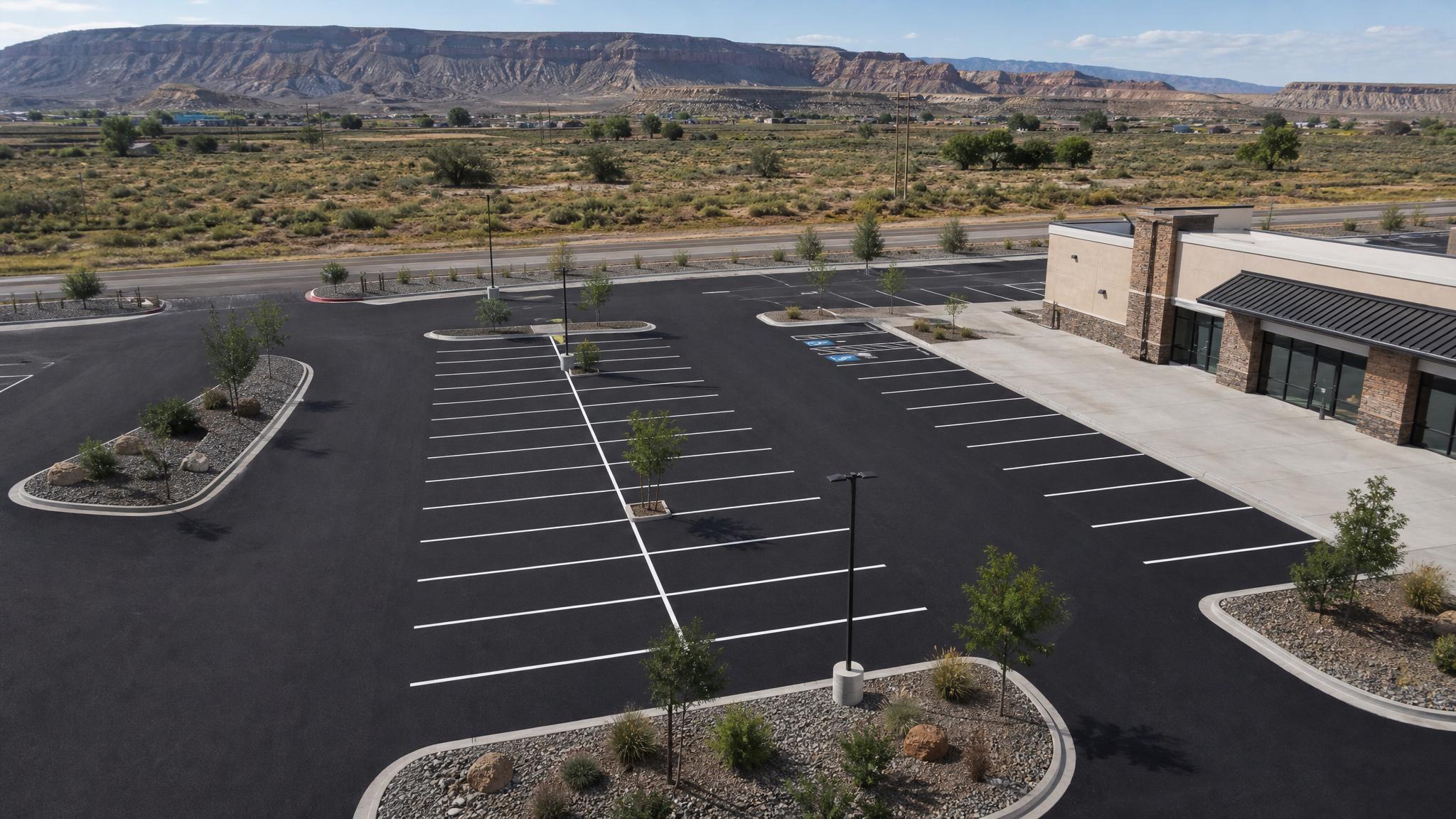
Parking lot services across the Grand Valley
The Grand Valley runs from Fruita in the northwest through Grand Junction and Clifton to Palisade in the east, with Orchard Mesa and the Redlands filling in the south. Parking lots here range from retail centers and medical offices along the main corridors to church lots, apartment complexes, shop yards in Fruita, and the gravel-edged lots that serve orchards and tasting rooms around Palisade. They all need the same basic care, but the way each one wears depends on where it sits.
This page pulls the common parking lot services together in one place so a property manager, church board, or business owner can describe the whole lot in a single request instead of chasing separate quotes for patching, sealcoating, and striping.
What parking lot services usually include
- Crack sealing to keep water out of the base before winter
- Pothole repair and patching, including saw-cut repair for failed areas
- Sealcoating for surfaces that are worn but still structurally sound
- Striping, including ADA stalls, arrows, fire lanes, and loading zones
- Drainage review where water sits after rain or snowmelt
- Resurfacing evaluation when maintenance is no longer enough
How lots wear differently around the valley
Every lot in the valley deals with strong high-desert sun that dries out the asphalt binder and winter freeze-thaw cycles that pry cracks wider. Beyond that, the details change from town to town. Lots near irrigated ground in Palisade and on Orchard Mesa can see sprinkler overspray and standing water that soften edges. In Fruita, dust, farm and equipment traffic, and wide turning areas are common. In Grand Junction and Clifton, busy commercial lots take the heaviest turning and braking wear at entrances and in drive aisles.
Noting those local conditions in a request helps separate a lot that needs routine maintenance from one with a drainage or base problem that sealcoat will not fix.
A sensible order of work
Parking lot work usually goes in a set order. Cracks are sealed and potholes patched first, the surface is cleaned and sealcoated once it is dry, and striping goes down last so the stall layout is fresh. A sealcoat laid over open cracks or loose patches does not last, which is why the repair steps come first. The parking lot maintenance page goes deeper on building a seasonal plan, and the maintenance calendar shows which months fit each step.
Details that help with a parking lot request
Include the town and nearest cross streets, an approximate lot size or stall count, the main problems you see, and any business hours or delivery times that limit when work can happen. Photos of cracks, potholes, and any spot where water collects are the most useful. If the lot has failed repeatedly in the same place, say so, since that often points to base or drainage trouble rather than surface wear.